
































We see the headline regularly. Bitcoin is finished. Blockchains are about to fall apart. Quantum computing will soon break every private key and destroy the entire cryptocurrency ecosystem. These claims spread quickly across X, Reddit and other social media platforms because they are dramatic, urgent and great for engagement. But are they true? Should blockchain users be worried? Or is this another case of fear grabbing more attention than facts?
Quantum computing has become one of the most discussed fields in modern technology. It appears in academic papers, conferences and mainstream media because it promises entirely new ways of solving problems. Yet when quantum computing enters the conversation about Bitcoin and blockchain technology, the tone usually shifts from curiosity to alarm. The idea that quantum computers could break cryptography or dismantle blockchain security is frequently repeated even though it does not align with the current state of quantum research.
Once we step back from the headlines and look at the science, the situation becomes clearer. Quantum technology is fascinating and will influence blockchain applications in the future, but it is not an immediate threat. Nor is it a guaranteed disaster. And more importantly, blockchains such as Bitcoin can evolve in ways that maintain strong security even in a future shaped by quantum computation.
As validators and infrastructure builders, we at Simply Staking work closely with the underlying layers that make blockchain networks function. This gives us a practical perspective on the relationship between blockchain architecture, quantum algorithms and next generation quantum research. In this article we explain what quantum computing really is, how quantum computers could interact with blockchain technology, which concerns are valid, which are exaggerated and how blockchains can adapt long before quantum systems become powerful enough to matter. For the sake of simplicity, we shall be taking Bitcoin as the main example within this article as probably it is the easiest to understand, but the underlying arguments stand for all other blockchains.
Understanding Quantum Computing and Why It Matters
Quantum computing is based on quantum mechanics, a field of physics that began with Max Planck in 1900. Planck discovered that energy is not released smoothly but in tiny packets known as quanta. This idea transformed physics and set the foundation for later breakthroughs by Albert Einstein and Niels Bohr.
Classical computers evolved much later. By the 1980s they shifted from large specialised machines into personal computers used at home and in the office. All of these systems rely on bits, which essentially represent information as either a 0 or a 1 (a sort of switch which is either on or off). With millions of bits working together, classical computers perform logical operations and process text, images and sound.
Quantum computers approach information in a very different way. Instead of bits, they use qubits. A qubit can represent 0 and 1, but also 0 and 1 at the same time through a principle called superposition (yes it is weird, but that is the true nature of quantum mechanics). When qubits become linked through entanglement, and when interference is used to amplify correct outcomes, a quantum computer can explore many possibilities simultaneously. While a classical machine processes information step by step, a quantum system can evaluate large search spaces in parallel. This difference is the reason quantum computers can potentially solve extremely complex problems faster than classical computers.
To visualise this, imagine a maze. A classical computer will start at the entrance and test one path at a time. It moves forward, reaches a dead end, returns and tries again until the exit is found. A quantum computer uses superposition to explore many paths at once. It does not automatically know the answer, but it uses quantum algorithms to increase the probability of the correct path and reduce the weight of wrong ones. This parallelism allows a quantum system to solve certain problems much more efficiently.
This difference in computational style is the foundation of both the excitement and the concern surrounding the future relationship between quantum systems, quantum algorithms and blockchain security.
Why Quantum Computing Raises Concerns About Blockchain Technology
Blockchains rely on cryptography that is extremely difficult for classical computers to reverse. Bitcoin uses private keys and public keys to create and verify digital signatures. These signatures, together with hashing functions, protect ownership and maintain the integrity of the blockchain framework. The difficulty of reversing these mathematical functions is a key reason why blockchains remain secure.
Quantum computers could influence this security model because they use quantum algorithms that operate very differently from classical algorithms. Two of these quantum algorithms are especially relevant:
• Shor’s algorithm, which could derive a private key from a revealed public key
• Grover’s algorithm, which can moderately accelerate search through a hash function
These algorithms represent a real application of quantum computation. They are the reason researchers explore quantum resistant cryptography and quantum blockchain architecture.
However, the important detail is that quantum computers cannot target Bitcoin’s address hashes. A Bitcoin address hides the public key behind two strong hashing functions. Shor’s algorithm cannot attack a hash. Grover’s algorithm does not provide nearly enough acceleration to make a brute force attack practical. This is why the threat applies only to public keys that have already been revealed and not to the entire blockchain.
It is also worth remembering that today’s quantum computers are extremely limited. Systems from companies such as D Wave Quantum Inc are designed for optimisation tasks and quantum annealing (a method where a quantum computer gradually settles into the lowest energy state to find the best solution to an optimisation problem). They do not run Shor’s algorithm or Grover’s algorithm. Even advanced research projects that deployed a prototype blockchain across a network of four cloud based annealing quantum computers cannot perform the type of quantum computation needed to break Bitcoin signatures. These experiments show the value of quantum computation today but they do not pose any risk to real blockchain networks.
Quantum computers could influence cryptographic structures in the future, but they cannot threaten modern blockchains today. This is why the conversation must focus on realistic timelines and not on speculation.
Why Cryptography Protects Blockchain Technology
Cryptography is the foundation of blockchain security. Bitcoin uses a private key to create a signature and a public key to verify it. The network does not reveal the public key until coins are spent. Until then, funds remain protected behind a hash that cannot be reversed by classical or quantum systems.
This detail is important when analysing quantum attacks. A quantum computer cannot target what it cannot see. If the public key is never exposed, there is no attack surface for quantum algorithms. Even when public keys have been revealed, users can move coins into next generation quantum resistant addresses long before any quantum system becomes strong enough to target them.
This design shows why most concerns about quantum blockchain architecture are overstated. Blockchains rely on robust, well understood cryptographic systems that can evolve without compromising the underlying blockchain framework.
The Common Myths About Quantum Attacks and Quantum Blockchain Risks
Quantum attacks are often discussed in exaggerated ways. These are the most common myths worth addressing.
The first myth claims that a quantum computer could break Bitcoin overnight. This assumes a sudden leap where a quantum computer instantly becomes capable of quantum supremacy for cryptographic tasks. No research in the field of quantum computing supports this idea.
The second myth claims that Bitcoin’s Proof of Work will collapse once quantum computers mature. In reality, Proof of Work relies on hashing, and quantum systems gain only a small advantage for hash based puzzles. The challenges that quantum computers excel at are very different from those used in Proof of Work. This is also why the concept of proof of quantum work is experimental. It explores how quantum systems might support new blockchain applications rather than replacing existing networks.
The third myth argues that blockchains will need entirely new blockchain architecture to survive the quantum era. This is incorrect. Blockchains can upgrade their signature schemes just as Bitcoin upgraded through SegWit and Taproot without replacing the entire architecture.
The fourth myth claims that all past transactions are vulnerable. Only public keys that have already been revealed are theoretically at risk. Unspent outputs remain hidden behind secure hashing functions. And when necessary, users can migrate to quantum resistant signatures long before any quantum system becomes powerful enough to matter.
Debunking these myths allows for a clearer and more grounded understanding of quantum blockchain security.
What Quantum Computers Could Actually Affect in the Blockchain Framework
Quantum computers are relevant to blockchain security because of their potential impact on digital signatures. Shor’s algorithm could derive a private key from a revealed public key. This is why networks plan future transitions to quantum resistant signatures.
Grover’s algorithm can speed up hash searches but only to a limited extent. Bitcoin uses hashing algorithms with very large security margins, which keeps them safe even under theoretical quantum computation.
The real concern is therefore limited to signature schemes and not to the underlying blockchain architecture. Even with next generation quantum systems, the blockchain framework remains intact. Only the cryptographic tools used to sign transactions may need to evolve.
Why the Quantum Threat Remains Distant and Why Scalable Quantum Systems Are Not Here Yet
Running Shor’s algorithm at a scale that threatens Bitcoin requires a fault tolerant quantum computer with millions of stable qubits and advanced error correction. No such device exists. Research projects, including those spanning two generations of D Wave annealing quantum computers across two countries, show interesting progress in distributed quantum computing but not in cryptographic attacks.
Some experiments deployed a prototype blockchain architecture across four cloud based quantum computers, demonstrating stable blockchain operation for thousands of cycles. These experiments highlight how quantum systems can support research into novel blockchain architecture. They show how quantum computation could enhance blockchain security and efficiency in future applications. They do not represent a threat to classical blockchains.
Research indicates that using quantum computation for cryptographic attacks is decades away. The blockchain community therefore has significant time to develop next generation quantum resistant tools and prepare for scalable quantum computing long before it becomes relevant to security.
How Bitcoin Can Evolve Through Quantum Cryptography and Quantum Resistant Design
Bitcoin has already shown its ability to upgrade safely. SegWit and Taproot were major improvements that occurred without disrupting the network. Quantum resistance can follow the same approach.
One important example is BIP 360, which proposes Pay to Quantum Resistant Hash. This introduces a new address type that uses quantum resistant cryptography. It allows classical and quantum safe signatures to coexist during a transition period and provides a clear migration path.
BIP 360 demonstrates that the network does not need a new consensus system or a new blockchain architecture. It only needs to evolve the way signatures are created and validated. Wallets can guide users through key rotation. Nodes can verify both signature types. Validators and miners can maintain continuity across the network.
This approach shows that a shift toward quantum resistant signatures would be a coordinated upgrade rather than a reinvention of Bitcoin.
What About Satoshi’s Old Wallets and Early P2PK Addresses
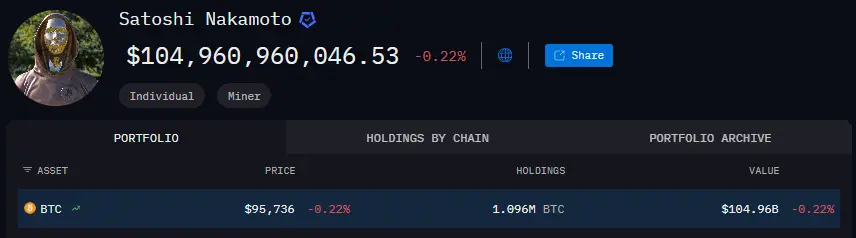
At this stage, it makes sense to address another important point: Satoshi’s Old Wallets.
A common question in any discussion about quantum computing and blockchain security is what happens to very old Bitcoin wallets, especially those linked to Satoshi Nakamoto. In Bitcoin’s early days, transactions often used an older format known as Pay to Public Key, or P2PK. Unlike modern address formats, P2PK exposes the full public key on the blockchain immediately. This means that Satoshi’s public keys, along with many other early miner outputs, are already visible today. In theory, a future large scale quantum computer running Shor’s algorithm could target these revealed public keys.
However, this scenario remains decades away, as the quantum systems required do not exist and may not be possible with current physics. Importantly, this does not represent a systemic risk for Bitcoin. It would certainly be a historic moment, but it would not compromise the blockchain, the consensus mechanism or the integrity of the network. Bitcoin would continue producing blocks, validating transactions and securing the ledger exactly as before. The affected coins would simply move, just like any other coins whose private keys become known. It simply reflects the reality that some very early wallets are effectively abandoned and cannot rotate to quantum resistant signatures. Modern Bitcoin addresses do not reveal the public key until coins are spent, which keeps the vast majority of the network safe even in a far future quantum era.
Next Generation Quantum Resistant Designs and Next-Generation Quantum Research in Other Blockchain Projects
Several projects have already explored quantum resistant cryptography in real environments. The Quantum Resistant Ledger uses XMSS hash based signatures as its foundation. IOTA originally used Winternitz one time signatures that naturally resist quantum attacks. Other research networks experiment with lattice based signatures such as Dilithium and Falcon, which are now part of global post quantum cryptography standards.
Together these examples show that quantum blockchain architecture is not theoretical. It is being tested and improved today. The lessons learned from these projects help the blockchain community plan for the future and design systems that remain secure even in a world with scalable quantum computers.
How Quantum Technology and Quantum Key Distribution Could Help Blockchains
Quantum technology is not only a potential risk. It also brings opportunities that could enhance blockchain security and efficiency in the future.
Quantum key distribution could provide secure communication channels. Quantum random number generators could strengthen blockchain applications that rely on randomness. Quantum simulation could offer new ways to analyse and optimise blockchain behaviour. These ideas highlight the potential of quantum computation to support new blockchain applications rather than undermine them.
What Users Should Keep in Mind
Most blockchain users do not need to take any action today. Quantum computing remains in the research stage. Blockchains already have clear paths toward quantum resistance. Wallets and infrastructure providers will manage transitions when quantum cryptography becomes relevant, and users will simply follow the guidance provided by these tools.
Quantum technology should be viewed with curiosity. It is a long term engineering challenge, not an immediate threat to blockchain technology.
Final Thoughts
Quantum computing is an impressive scientific achievement that expands what is possible in computation. Its relationship with blockchain security is real, but quantum computers capable of breaking Bitcoin or other blockchains do not exist today. Developers have ample time to prepare, and proposals such as BIP 360 show that the transition to quantum resistant signatures is already well understood.
Rather than seeing quantum computing as a threat, it is more accurate to see it as a catalyst for innovation. It encourages new research into blockchain applications, future blockchain architecture and cryptographic standards that are designed to last well into the quantum era. With careful planning and thoughtful design, blockchains can remain secure, reliable and adaptable even as quantum systems continue to evolve.
If you enjoyed this article, we invite you to explore our recent piece on PerpDexs, a phenomenon that continues to grow rapidly in popularity. You can also read our article on Near Intents to discover how artificial intelligence is being integrated into the Near Protocol. And for more updates from the world of blockchain technology, make sure to follow our Simply Staking X account.