





















Cosmos has always stood apart from the rest of the crypto world. While most blockchain networks pursued massive, monolithic chains, Cosmos envisioned something different. Cosmos strived to build a modular framework supporting an ecosystem of blockchains, each sovereign yet interconnected. This gave rise to a vibrant crypto ecosystem built on the Cosmos SDK, powered by Tendermint consensus, and linked through the Inter-Blockchain Communication protocol (IBC).
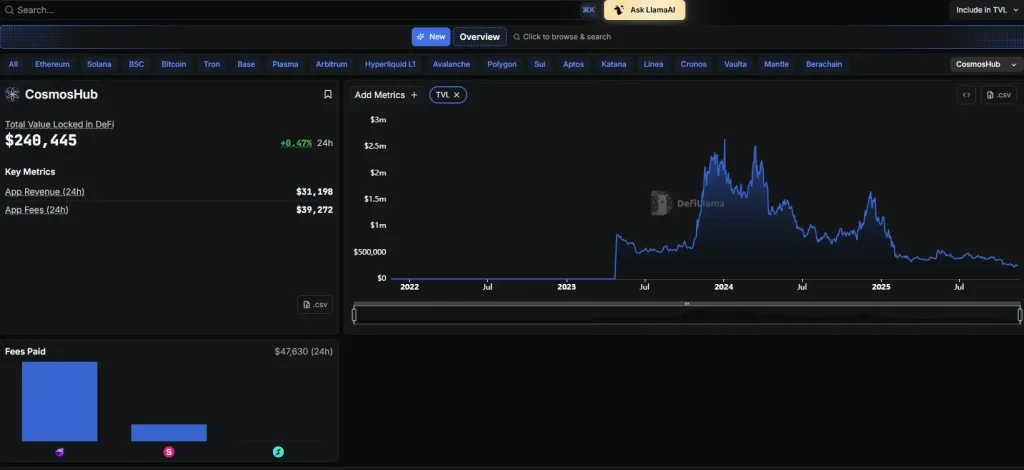
Yet with innovation came complexity. Over time, governance fragmented, development slowed, and the state of the network became uncertain. A look at CosmosHub’s Total Value Locked (TVL) shows that despite the network’s foundational role in the interchain, it struggled to retain capital throughout 2025. As of the time of writing, the Cosmos Hub’s TVL has dropped to just $240,445, which is significantly down from its peak in mid-2024.
So is that it? Is Cosmos destined to die like many others? Well not just yet!
Cosmos is entering a new era, led by Cosmos Labs and driven by a renewed focus on stability, execution, and clarity. This shift affects not just the Cosmos Hub and ATOM coin, but also how users trade Cosmos, analyze the cosmos price, and engage with the broader cryptocurrency market.
Considering all the recent developments, we thought it is time to have another look at Cosmos to discuss the recent changes and try to shed light on what the project is aiming to achieve.
What Is Cosmos and Why It Matters in the Crypto Industry
Before we dive into the latest news, we first need to understand what Cosmos is.
Essentially, Cosmos is a decentralised network of interoperable blockchains, often referred to as the “Internet of Blockchains”. At its core are tools like the Cosmos SDK and IBC protocol, enabling custom proof-of-stake chains that maintain sovereignty while remaining interoperable. In turn, this architecture supports scalability, modularity, and speed which are all key factors for crypto developers.
The Cosmos Hub is the original chain in the network and the native home of the ATOM token. With a dynamic validator set and a circulating supply in the hundreds of millions (478.28 Million ATOM coins to be exact), ATOM plays a central role in securing the network, participating in governance, and enabling interchain services. Additionally ATOM staking rewards have historically incentivised long-term holders to contribute to the network.
Considering that a deep dive is beyond the scope of this article, we highly encourage you to check out this article which gives a clear overview of what Cosmos is: The Cosmos Hub: An Introduction to the Internet of Blockchains.
Cosmos Labs and the Return to Clear Leadership
Formed in 2025 after the Interchain Foundation acquired the Skip protocol team, Cosmos Labs is now the central engineering and product team responsible for the Cosmos Hub and Cosmos stack. This marks a significant shift away from decentralised stewardship toward structured execution.
Cosmos Labs has quickly delivered results. Notable achievements include:
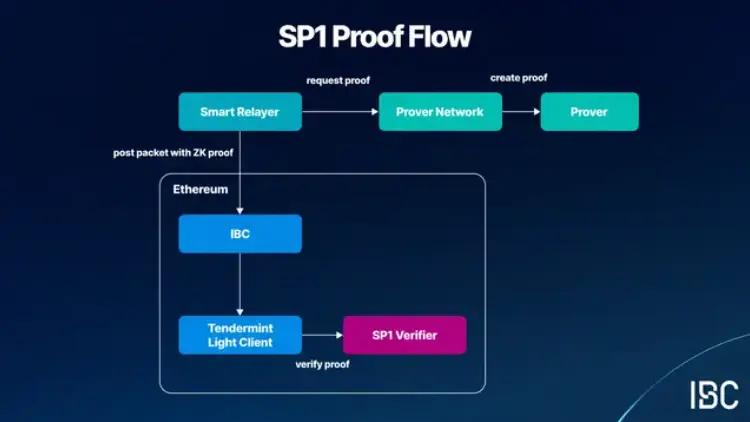
- Launch of IBC v2 (Eureka) with a ZK bridge to Ethereum, changing the game for blockchain interoperability.
- Release of Cosmos SDK v0.53 with no breaking changes, simplifying upgrades for developers.
- Open-sourcing of the Cosmos EVM, bringing Ethereum-compatible smart contracts to the ecosystem.
- Coordination of efforts to align the Cosmos price action with real-world adoption and value.
Cosmos Hub: From Minimalist to Economic Powerhouse
The Cosmos Hub is undergoing a dramatic transformation. Once envisioned as a neutral router, the Hub is now positioning itself as an economic center of the interchain by hosting liquidity, smart contracts, and vital services. This pivot is backed by governance and Cosmos Labs’ strategy.
In 2025, Proposal 1007 passed, enabling permissionless CosmWasm smart contracts directly on the Hub. This allows the ATOM coin to be used for a growing number of real-time applications, DeFi products, and cross-chain services. Cosmos Labs also partnered with Stride to launch an IBC-native DEX on the Hub, boosting trading volume and making Cosmos more appealing for users looking to buy Cosmos or trade it directly.
This evolution aligns the price of Cosmos more directly with the utility of its infrastructure. By hosting modular services natively, the Cosmos Hub is now one of the most important contributors to the network’s overall value and usage.
Interchain Security Evolves: From Replicated to Partial Set
Shared security in Cosmos began with Replicated Security (RS) where the Cosmos Hub’s validator set also secured “consumer chains.” However, that model proved inflexible and therefore, a natural shift happened which led to Partial Set Security (PSS). Essentially, now chains can now opt-in to use subsets of validators, creating a more sovereign yet secure dynamic environment.
In early 2025, Neutron, the first major consumer chain, exited the RS model in favor of full sovereignty. This reflected realignment between Cosmos’ decentralised ideals and practical governance. While shared security remains an option, Cosmos is now emphasising interchain service hosting on the Hub itself.
Some time ago, we took a deeper look at PSS. For a breakdown of this transition, read our article here: Cosmos Hub: From Replicated to Partial Set Security.
Sovereignty and Decentralisation Remain the Foundation
Cosmos was built on the principle that every chain should define its own economics, fees, and governance. This ethos continues. Whether through sovereign appchains like Osmosis or integrated services on the Hub, Cosmos ensures chains can evolve independently.
It is also worth nothing that governance remains fully on-chain, with ATOM holders participating directly in protocol-level decisions. From staking rewards to validator incentives, every aspect of the network is subject to decentralised consensus which is a core value in the broader cryptocurrency ecosystem.
A Stack Built for Institutions and Developers Alike
To scale Cosmos for institutional adoption, Cosmos Labs has focused on maturity, performance, and stability. Enhancements include:
- Long-Term Support (LTS) releases of the Cosmos SDK for reliable deployments.
- IBC v2 with Ethereum and future Solana integration.
- Support for modular rollups and data availability layers like Celestia.
- Simplified technical analysis for investors evaluating the current price of Cosmos and future price movements.
Cosmos Labs’ development also addresses pain points such as documentation gaps, validator onboarding, and deployment pipelines. This makes Cosmos increasingly viable for enterprises, fintech, and traditional institutions looking to explore blockchain technology.
Cosmos Price and ATOM Price in 2025
The ATOM price has historically tracked both network usage and speculative demand. In 2025, new use cases such as on-chain DEXs, Ethereum bridges, and smart contract platforms are creating organic demand for ATOM, and therefore with increased staking, new dApps, and adoption of the Cosmos EVM, there seem to be clear drivers behind the cosmos price today.
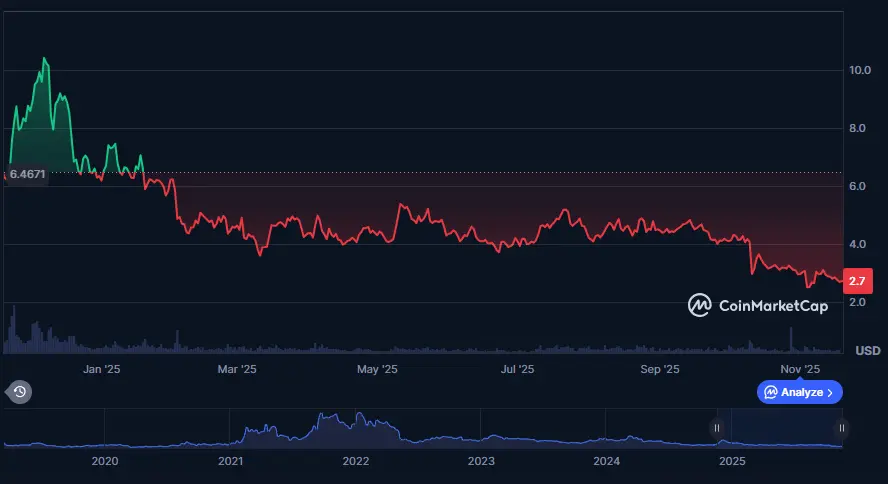
That said, historical price charts, especially when focusing on that last 12 months show that the ATOM token has seen a dramatic decrease in price, even when considering that the general tread of the crypto market has been positive. Even so, the broader Cosmos ecosystem is going through a period of major transformation, which means the long term impact of these upgrades may not be fully reflected in the current ATOM price just yet.
Challenges and Community Governance
Cosmos still faces plenty of internal debates. Should the Hub act as an economic powerhouse or maintain neutrality? Should ATOM inflation be redirected toward public goods? Should liquid staking be consolidated?
Governance votes reveal active participation and disagreement. Yet, it may be argued that this friction is a strength, as cosmos continues to evolve through open participation, not top-down control. Furthermore, Cosmos Labs, for its part, listens. It delayed SDK breaking changes, adjusted roadmap priorities based on developer feedback, and co-developed strategies with other teams to protect decentralisation.
Cosmos in a Multi-Chain Future
As modular blockchain ecosystems grow, including Ethereum rollups, Avalanche subnets and Polkadot parachains, Cosmos remains uniquely positioned. Its technology supports true blockchain interoperability via IBC. Its network model enables sovereign experimentation. And its roadmap delivers what the crypto news cycle often lacks: real execution.
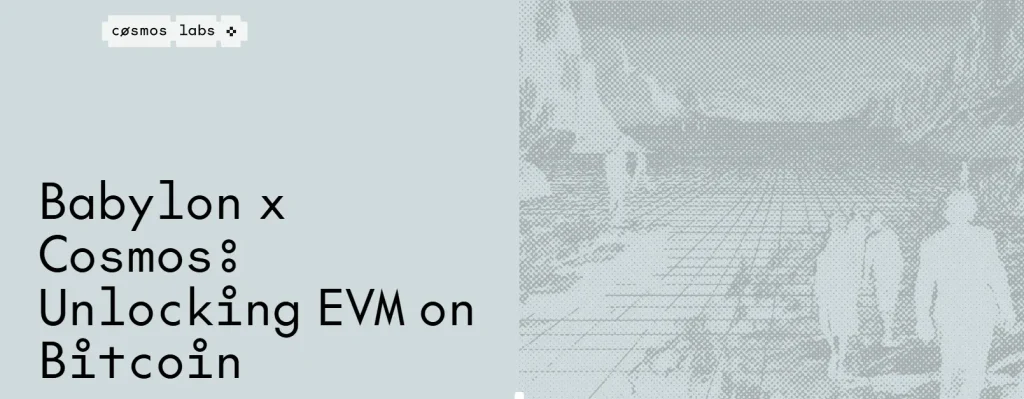
Recent integrations with Bitcoin (via Babylon), stablecoin issuers (via Noble and Stable), and enterprise-grade modules are signs of Cosmos’ broadening scope. By anchoring interoperability in a modular, sovereign-first design, Cosmos is not just catching up to trends but it’s setting them.
Conclusion: Why Cosmos and ATOM Matter More Than Ever
With Cosmos Labs now leading the roadmap, the Cosmos ecosystem has returned to its roots, but it may be argued that this time it is with a stronger spine. ATOM is no longer a governance token waiting for purpose, but now it is powering an expanding suite of tools, contracts, bridges, and services across a vast network.
Whether you’re a developer building on the Cosmos SDK, a trader tracking cosmos price, or a validator contributing to the security of the Cosmos Hub, the next chapter of Cosmos offers clearer use cases, more predictable development, and real-world traction.
If you have made it this far in the article, we would like to thank you and highly encourage you to follow Simply Staking on X for ongoing crypto news and Cosmos ecosystem updates!