
























Co authored by Matthew Felice Pace, CEO of Simply Staking, and Pavel Sivayeu, CTO at Aetsoft
Raising capital for private assets such as real estate projects, private companies, or debt instruments remains slow and operationally complex, as private placements typically require extensive documentation, coordination between lawyers, brokers, and other intermediaries, and also access to closed investor networks. Furthermore, cross-border offerings add another layer of regulatory requirements, making compliance fragmented and very time consuming. As a result, real estate developers, fund managers, and asset owners often face a process that is opaque, expensive, and geographically constrained. Against this backdrop, interest in alternative frameworks such as the STO Platform model has increased as organisations seek more structured and scalable approaches to capital formation.
A Security Token Offering (STO) is quickly emerging as a structural response to these inefficiencies. Instead of simply digitising an asset, an STO uses blockchain infrastructure to embed compliance, investor eligibility, transfer restrictions, and settlement logic directly into the token itself. In theory, this approach can streamline issuance, improve transparency, and reduce administrative friction, while still operating within securities law.
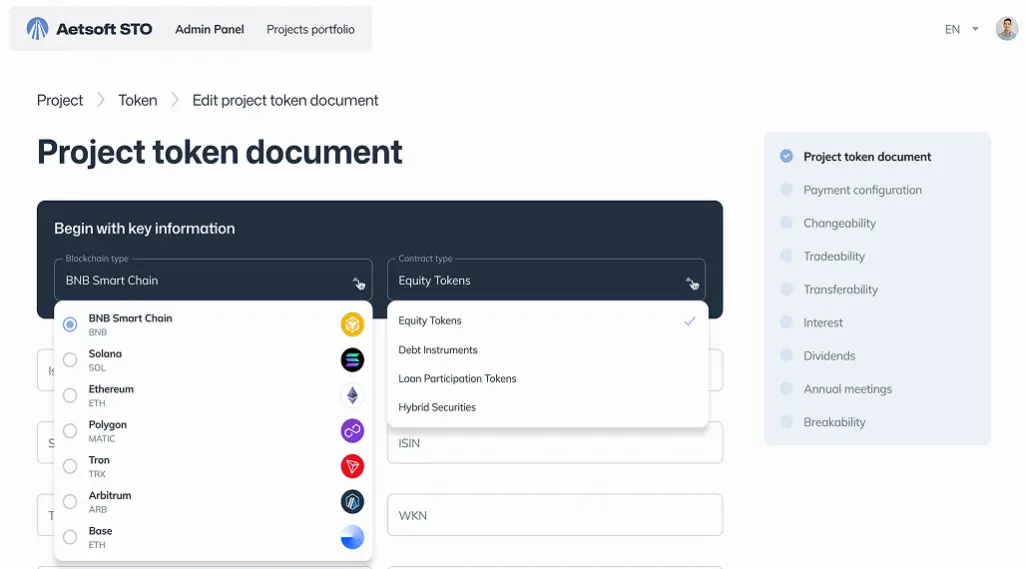
However, launching a compliant STO is not just about minting a token. It requires a regulated issuance framework, KYC and AML controls, investor onboarding workflows, cap table accuracy, and clearly defined secondary trading pathways. This is where a Security Token Offering platform becomes critical, providing the operational layer for compliant issuance and investor management. In practice, an STO platform can help coordinate onboarding, token distribution, reporting, and governance, while supporting the transfer controls that are central to regulated tokenisation.
Executive Overview
Tokenisation is no longer limited to experimental pilot projects. As it moves closer to institutional adoption, expectations have shifted, and now investors and regulators demand predictable economics, verifiable ownership records, embedded compliance controls, and transparent investor registers. In other words, tokenised assets are increasingly judged by the same standards as traditional securities.
Modern STO programmes behave as complete market systems rather than one time capital raises. In practice, this means that issuers must manage onboarding, transfer restrictions, distributions, governance events, reporting, and secondary trading conditions throughout the lifecycle of the asset.If you wish to dive deeper into the regulatory context around tokenised securities, Aetsoft’s analytical overview of STOs explains how security tokens differ from both utility tokens and traditional securities models.
Why STO Infrastructure Is Entering a New Maturity Phase
Institutional Expectations Around Real-World Asset Programmes
Institutions exploring real-world asset tokenisation expect systems that behave like regulated financial infrastructure, and therefore expect deterministic compliance rules, clear audit trails, and consistent cap table updates. When organisations tokenise real estate, funds, or structured instruments, they require predictable behaviour rather than experimental flexibility.
For example, a modern tokenisation platform for real estate must handle investor onboarding, enforce eligibility criteria, automate distributions, and maintain accurate ownership records, as these are fundamental operational requirements, not just optional enhancements.
Regulatory Clarity and Market Evolution
It is evident that securities regulators are increasingly applying established legal principles to tokenised securities, and for the most part the message is consistent across jurisdictions: if it behaves like a security, it will be regulated like a security.
That reality has significantly accelerated demand for STO compliance engines that embed transfer restrictions, residency controls, lock-ups, and investor verification directly into smart contract logic, effectively starting to shift compliance from a manual review process to programmable enforcement.
Liquidity Fragmentation and Infrastructure Constraints
Liquidity in token markets cannot be assumed. Liquidity develops only when the underlying infrastructure is stable, compliance rules are consistently enforced, and data remains synchronised across custody, settlement, and reporting systems. A regulated token offering platform therefore needs to integrate transfer controls, custody arrangements, settlement workflows, and regulatory reporting into a coherent framework that reduces uncertainty for participants. Without that structural integrity, secondary trading does not scale and remains fragmented.
From Issuance to Lifecycle Orchestration
Early tokenisation efforts focused primarily on minting and distributing tokens. As the market has matured, attention has shifted toward full lifecycle management. Modern programmes must support distributions, vesting schedules, redemptions, buybacks, governance voting, and controlled transfers, all recorded with audit ready precision. Platforms such as the Aetsoft STO framework are designed to address this broader operational layer, supporting end-to-end lifecycle automation rather than isolated issuance.
Two Complementary Vantage Points: Aetsoft and Simply Staking
Aetsoft’s Vantage Point
Aetsoft positions itself as a provider of compliant digital asset infrastructure rather than a simple token minting service. Its focus is on building a white-label STO platform that enables security token issuance within a governed and structured framework. Instead of treating issuance as a standalone technical event, the platform is designed to integrate investor onboarding, workflow automation, cap table management, and audit ready compliance controls into a single operational layer.
In practical terms, this means that rights, restrictions, and economic parameters are embedded directly into the asset, while governance and reporting processes remain aligned with regulatory expectations. The underlying philosophy is clear: tokenised securities should function as regulated financial instruments, not as speculative digital products.
Simply Staking’s Vantage Point
Simply Staking specialises in blockchain infrastructure, validator operations, and institutional grade reliability across multiple networks. Its operational focus centres on infrastructure resilience, sustained uptime, and predictable settlement behaviour, all of which are critical in regulated digital asset environments.
Through its institutional infrastructure capabilities at Simply Staking, organisations gain access to high availability systems, continuous monitoring, and multi-chain observability engineered for enterprise level performance. This approach helps ensure that digital securities platforms operate on stable and well maintained networks rather than fragmented or experimental infrastructure.
Why These Perspectives Matter Together
Security Token Offerings depend on 2 importnat interlocking layers: the correct behaviour of the token itself and the reliability of the underlying blockchain infrastructure. Platforms such as Aetsoft focus on the asset layer, embedding compliance automation, transfer controls, and lifecycle management into programmable securities. On the other hand, infrastructure providers such as Simply Staking, by contrast, concentrate on network stability, uptime, monitoring, and performance consistency.
For institutions evaluating an asset tokenisation platform, these layers cannot be separated. Robust token logic without dependable infrastructure introduces operational risk, while reliable infrastructure without compliant asset architecture weakens regulatory integrity. When both layers are aligned, tokenised securities can function within a stable and institutionally credible framework.
The New STO Architecture: A Unified Framework
Programmable Compliance as the Structural Foundation
First of all, we shall start by noting that investor eligibility, residency restrictions, lock-ups, and transfer permissions can be encoded directly into smart contract logic, allowing compliance to be designed into the system rather than applied after the fact. Instead of relying solely on reactive oversight, rule enforcement becomes part of the asset’s operational architecture.
Furthermore, audit trails are recorded automatically, reducing reconciliation delays and limiting the scope for human error. Within this model, rights, restrictions, and economic parameters are embedded into the digital securities platform itself, ensuring that the asset behaves according to predefined rules rather than discretionary processes.
Infrastructure Reliability as a Condition for Market Trust
Even well designed token logic loses effectiveness if the underlying settlement infrastructure is unreliable. Network downtime, inconsistent RPC performance, or latency spikes can interrupt investor access and disrupt operational continuity at critical moments.
For institutions, resilience is not optional. Multi-region redundancy, continuous monitoring, and validator level visibility are essential to maintain predictable execution behaviour. Without that stability, market confidence weakens and the integrity of the digital securities environment is compromised.
Synchronising On-Chain and Off-Chain Realities
Tokenisation heavily depends on consistent reconciliation between blockchain records and traditional financial systems. Custodians, banks, registrars, escrow agents, and reporting platforms must exchange aligned and timely information throughout the asset lifecycle. Where data flows fall out of sync, discrepancies in timing or record keeping can create operational inefficiencies and regulatory exposure. For this reason, an STO platform must integrate on-chain execution with off chain reporting within a unified and coherent framework.
Designing Secondary Markets for Safety and Predictability
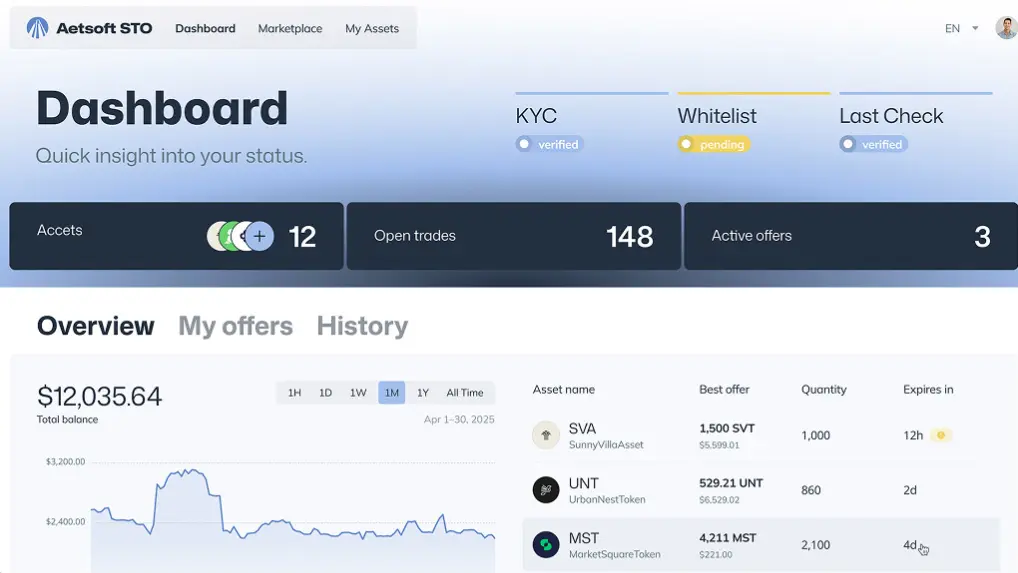
Liquidity does not arise automatically from token issuance. It develops when transfer restrictions, permissioning rules, reporting systems, settlement workflows, and custody arrangements operate together without friction. Whether trading occurs through peer-to-peer markets or more controlled environments, infrastructure stability directly influences investor confidence and pricing transparency. For institutions, liquidity must therefore be engineered through coherent system design rather than assumed as a natural outcome.
Institutional Failure Modes and How To Mitigate Them
Failure patterns in tokenised markets tend to arise from structural weaknesses rather than from the underlying technology alone. Misclassification of a token under securities law, overly flexible upgradeable smart contracts that dilute governance, network instability that interrupts investor access, misalignment with custodians, fragmented reporting systems, and the reintroduction of manual processes into automated workflows can all undermine programme integrity. These issues are rarely isolated and they tend to compound over time when architectural discipline is weak.
Addressing them requires more than just incremental fixes. Deterministic token logic, tightly controlled upgrade paths, redundant and continuously monitored infrastructure, consistent reconciliation standards, and comprehensive integration testing before investor onboarding form the foundation of a resilient framework. When these principles are applied systematically, a Security Token Offering platform evolves from a technical deployment tool into a functioning regulated financial system.
Case Patterns Illustrating Practical STO Value
Tokenisation delivers its structural advantages most clearly when viewed through recurring operational patterns rather than through individual asset classes. In real estate programmes, automated cap table updates and streamlined closing cycles reduce reliance on manual reconciliation as ownership records update systematically. Within tokenised fund structures, deterministic distribution schedules and transparent unit holder registers improve visibility and reduce administrative friction. Bond or corporate debt tokens can embed coupon payments and structured redemption mechanics directly into smart contract logic, limiting operational intervention. Additionally, commodity and credit instruments benefit from enhanced traceability, as consistent digital records strengthen transparency across the lifecycle of the asset.
What the Next Generation of STO Markets Will Look Like
Looking ahead, tokenisation frameworks are likely to evolve towards greater multi-chain interoperability and more seamless cross-environment liquidity. As digital securities mature, token standards will increasingly embed defined compliance primitives and clearer lifecycle structures, reducing ambiguity in how assets are issued, transferred, and managed. Over time, issuance, custody, and settlement functions may converge into more unified architectures designed to limit fragmentation across systems.
In this context, infrastructure resilience and predictable performance will become decisive factors in institutional adoption. As these layers integrate, STOs are expected to shift from standalone capital raising mechanisms into embedded components of broader digital financial ecosystems.
Closing Perspectives from the Co-Authors
Both Simply Staking and Aetsoft share a common view that the maturation of tokenised markets depends on both deterministic asset logic and resilient infrastructure.
Pavel Sivayeu
The future of the STO platform lies in deterministic lifecycle automation combined with embedded programmable compliance. By encoding transparent, machine enforced rules directly into the asset architecture, operational ambiguity is reduced and confidence is strengthened for both issuers and investors.
Matthew Felice Pace
Infrastructure reliability ultimately determines whether tokenised markets can operate at institutional scale. When settlement is predictable, uptime remains consistent, and performance is stable, digital asset operations can function with the continuity and confidence that regulated environments demand.
FAQs
What is an STO platform?
An STO platform is a regulated digital securities platform that enables businesses to issue, manage, and potentially trade tokenised securities under existing legal frameworks.
How is an STO platform different from a traditional token launch platform?
A traditional launch platform focuses on distribution. An STO platform embeds compliance, investor onboarding, lifecycle automation, and reporting consistent with securities regulations.
Can an STO platform support real estate tokenisation?
Yes. A tokenisation platform for real estate can manage investor onboarding, enforce eligibility rules, automate distributions, and maintain transparent ownership records.
What features should a white-label STO platform include?
Core STO platform features typically include compliance automation, cap table management, lifecycle orchestration, transfer restrictions, and optional secondary trading integration.
Is no-code security token issuance realistic?
Modern platforms can enable no-code security token issuance for standardised offerings. However, complex structures may still require legal and technical customisation.
Final Call-to-Action
Organisations evaluating tokenisation strategies or expanding digital asset operations require both compliant asset architecture and resilient infrastructure. By combining Aetsoft’s structured STO platform capabilities with Simply Staking’s institutional grade network infrastructure, programmes can be designed to operate with predictable performance, regulatory clarity, and audit ready governance. This integrated approach supports scalable tokenisation frameworks for 2025 and beyond.